
An LED video wall is the centrepiece of most modern events — the thing every guest looks at. But “LED screen hire” covers a huge range of products, and the wrong choice shows up instantly as a blurry image, a washed-out picture in daylight, or a wall that's the wrong shape for the room. This guide breaks down the two decisions that matter most — indoor vs outdoor and pixel pitch — and how to size and budget an LED screen for your event.
Indoor vs outdoor LED screens
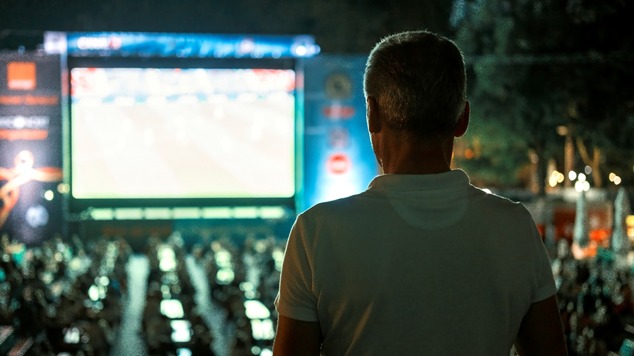
This is the first fork in the road, because indoor and outdoor panels are built differently:
| Indoor LED | Outdoor LED |
Brightness | Lower — tuned for controlled lighting | High — stays visible in daylight |
Weatherproofing | Not rated for rain | IP-rated, sealed against weather |
Pixel pitch | Finer (close viewing) | Coarser (viewed from distance) |
Typical use | Conferences, stages, galas | Festivals, sports, outdoor concerts |
Weight/rigging | Lighter | Heavier, more robust rigging |
The short version: if there's any chance of daylight or weather, you need an outdoor-rated screen — an indoor panel outdoors will look dim and risks water damage. Indoors, you get a finer, sharper image for less money.
Stage lighting design: why it matters more than the gear
Pixel pitch is the distance in millimetres between each LED. A smaller number means pixels are closer together, so the image is sharper — and the screen is more expensive. The trick is matching pitch to how close your audience sits: you don't pay for a fine pitch nobody's close enough to notice.
Pixel pitch | Looks sharp from | Best for |
1.5–2.5mm | 1–3 metres | Lobbies, broadcast, close-up displays |
2.6–3.9mm | 3–6 metres | Conference stages, corporate events |
4–6mm | 6–12 metres | Large stages, ballrooms |
7–10mm+ | 12 metres+ | Outdoor festivals, arenas, sport |
A simple rule of thumb: your minimum comfortable viewing distance in metres ≈ the pixel pitch number. A 3mm screen looks crisp from about 3 metres back; from 10 metres, a cheaper 6mm screen looks identical to the eye.
How to size an LED screen for your event
Three things drive the size you need:
- Room depth — the further back the last row sits, the bigger the screen has to be to stay readable.
- Content — live camera feed of a speaker needs less resolution than detailed slides, spreadsheets or a branded show reel.
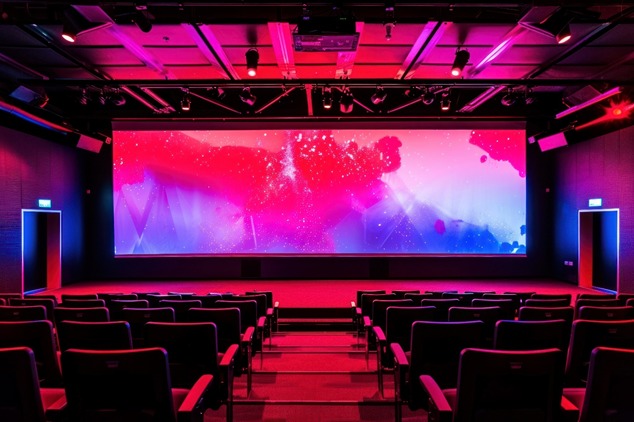
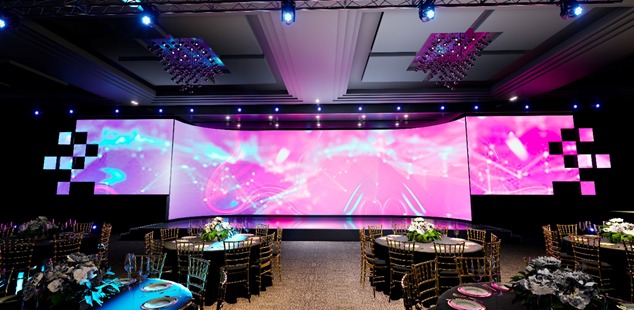
- Aspect ratio — LED walls are modular, so they can be built to almost any shape: standard 16:9, ultra-wide for a stage backdrop, or custom for a set design. This flexibility is why LED has largely replaced projection at conferences, concerts and exhibition stands.
Common mistake to avoid Ordering a screen sized for the front of the room. Always size for the back row — if the people furthest away can read it comfortably, everyone can. A quick way to sanity-check: text should be legible to someone standing at the very back before the event starts. |
What an LED screen hire package should include
- The LED panels themselves, built to your size and shape
- Processing and scaling (to send your content to the wall cleanly)
- Rigging, ground support or wall mounting
- Content setup and a technician on site to run it
- Delivery, installation and de-rig (“bump-in” and “bump-out”)
If a quote only lists the panels, ask what else is included — processing and an on-site tech are what make the screen actually work on the day.
LED screen hire in Melbourne
Mars Productions supplies, builds and operates indoor and outdoor LED screens and video walls for conferences, weddings, concerts, exhibitions and outdoor events across Melbourne. Because we deliver, rig and run the screen with our own technicians, the picture that looks right in planning is the picture your audience sees on the day.
frequently asked questions
Pixel pitch is the distance in millimetres between the centres of two adjacent LEDs on a screen. A smaller pixel pitch means the pixels are closer together and the image looks sharper up close, but costs more. Match the pitch to your audience’s viewing distance rather than always buying the finest available.
Outdoor LED screens are brighter and weatherproof (IP-rated) so they stay visible in daylight and survive rain, while indoor screens are tuned for controlled lighting with a finer pixel pitch and sharper close-up image. Using an indoor screen outdoors risks a dim picture and water damage, so always match the screen to the environment.
LED screen hire cost depends on the screen size, pixel pitch, indoor or outdoor rating, rigging and how long you need it. A small indoor wall starts lower, while large or outdoor screens with full rigging and crew cost more. Provide your event size and venue for an accurate quote.
Size your LED screen for the back row of your audience, not the front. The further back the last viewer sits, the larger the screen needs to be to stay readable. Detailed content like slides needs more resolution than a live camera feed, so factor in what you’ll display as well as room depth.
Yes. LED walls are made of modular panels, so they can be configured into almost any size or shape — standard 16:9, ultra-wide stage backdrops, curved walls or custom set pieces. This flexibility is a key advantage of LED over fixed projection screens.
Get a fast, tailored LED screen quote
Every event is different, so the most accurate figure is a real quote based on your venue, dates and content. Tell us what you're planning and our Melbourne team will recommend the right screen size and pixel pitch and send a clear, itemised quote — usually the same business day.