
To plan a successful hybrid event, treat your in-person and virtual audiences as equally important and design for both from the start. Build the technical foundation first — professional audio and vision capture, a reliable dedicated internet connection with backup, and a streaming platform suited to your audience — then design engagement that includes remote attendees through live polls, moderated Q&A and a dedicated online host. The most common failure is treating the virtual audience as an afterthought watching a static camera.
Hybrid is now the default expectation for many corporate events, but it is genuinely harder to run than either a purely in-person or purely virtual event, because you are producing two experiences at once. Our hybrid event AV service in Melbourne exists for exactly this reason. Here is how to do it properly.
Design for two audiences from day one
The biggest mistake in hybrid events is bolting a webcam onto an in-person event and calling it hybrid. Remote attendees who feel like eavesdroppers drop off within minutes. Instead, plan the run of show with both audiences in mind: build in moments that speak directly to online viewers, ensure on-screen content is legible on a laptop, and pace the day so remote attendees are not sitting through long in-room-only segments.
A useful principle: if a remote attendee would have a worse experience than an in-person one at any given moment, redesign that moment.
Get the technical foundation right
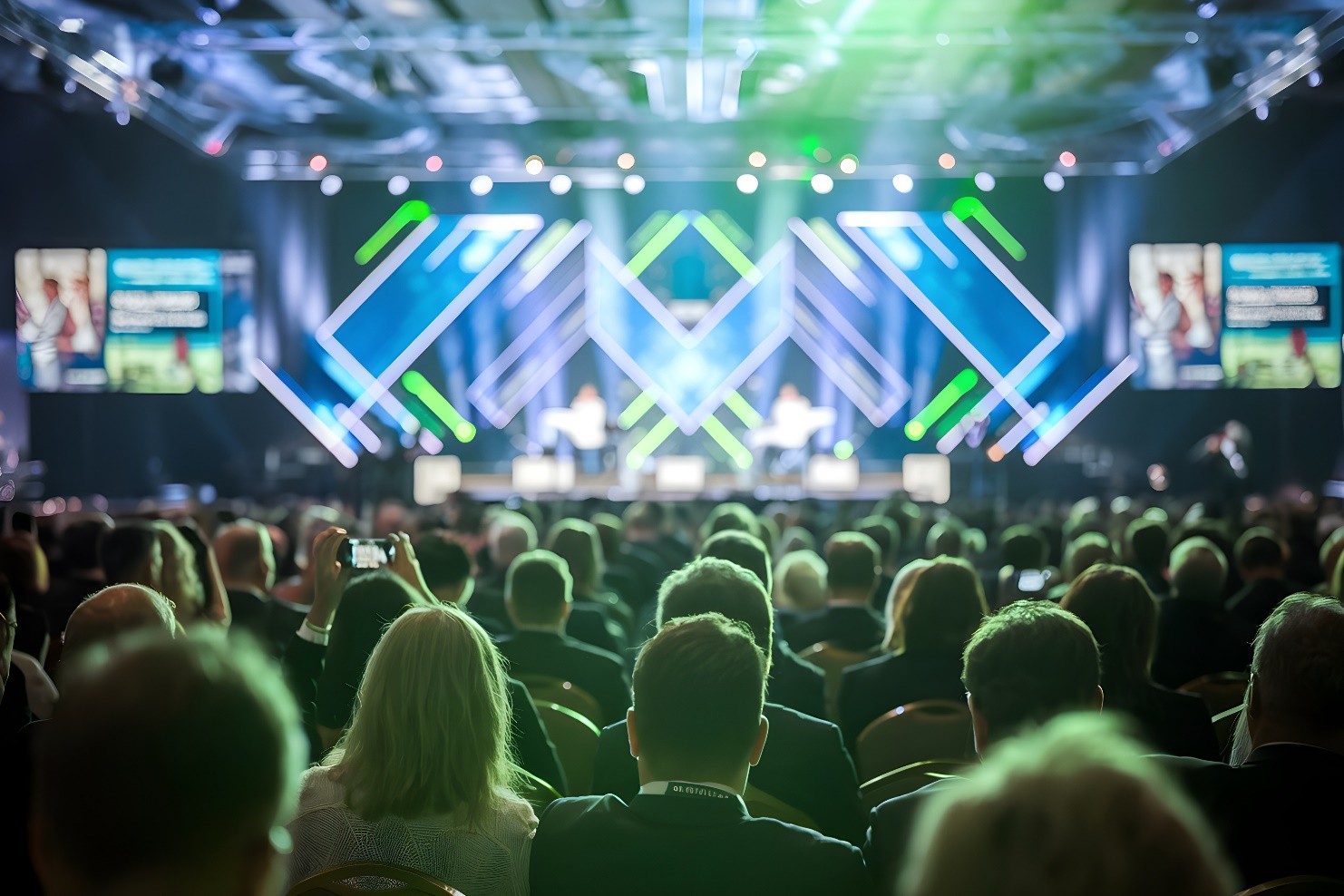
Hybrid events are unforgiving on technical quality. Poor audio is the number one reason remote viewers leave — they will tolerate imperfect video far longer than they will tolerate sound they cannot understand. Invest in proper microphones and a clean audio feed to the stream, not a room mic picking up echo.
The second non-negotiable is connectivity. Venue Wi-Fi is rarely sufficient for reliable streaming. A professional setup uses a dedicated, hardwired connection with a bonded or cellular backup so a single point of failure cannot take the whole stream down mid-session.
- Dedicated microphones for every speaker and a clean audio feed to the stream
- Multiple camera angles with a vision mixer, not a single static webcam
- A hardwired internet connection with a tested backup
- A streaming platform matched to audience size and interaction needs
Give the virtual audience a dedicated host
Engagement is what separates a hybrid event from a webinar. Use live polling, moderated Q&A that pulls questions from both the room and the stream, and interactive segments that deliberately mix the two audiences. When a remote attendee's question is answered on stage, every online viewer feels included.
Capture the content too. A well-produced hybrid event generates on-demand recordings that extend its value for weeks afterward — a strong argument for investing in production quality up front. You can see examples in our event portfolio.

Rehearse the whole thing
A technical rehearsal is not optional for hybrid. Run every speaker through their setup, test every transition, confirm the stream is live and stable, and check that remote-attendee interaction actually works end to end. Rehearsal is where you find the problems while there is still time to fix them.
In Australia, factor in that some of your remote audience may be in different time zones — from Perth to the eastern states is a two-to-three-hour gap. Schedule and promote session times clearly across zones, and talk to our team early so the technical plan is locked well before the day.
Interrogate the contingency plan
Professional producers plan for failure. Ask directly: what happens if a projector dies during a keynote? If mains power drops? If a presenter's laptop won't connect? A confident, specific answer — redundant equipment on site, backup power, spare radio mics, a tested failover for streaming — signals a company that has been through it. A vague answer is a red flag.
For hybrid conferences, contingency extends to internet. A serious producer brings a bonded or backup connection rather than relying solely on venue Wi-Fi, and can advise on the right hybrid event setup for your format.
frequently asked questions
Audio quality and a reliable internet connection. Remote attendees will forgive imperfect video but will leave immediately if they cannot hear clearly or the stream keeps dropping. Get these two foundations right before anything else.
A webinar is a broadcast to an online audience. A hybrid event runs a full in-person experience and a virtual experience simultaneously, with genuine two-way engagement between them. It requires more production infrastructure and deliberate design for both audiences.
Yes, ideally. A dedicated online host keeps remote attendees engaged, relays their questions to the stage and fills transitions. Without one, the virtual audience tends to feel like passive observers and drop off.
Get a fast, tailored LED screen quote
Every event is different, so the most accurate figure is a real quote based on your venue, dates and content. Tell us what you're planning and our Melbourne team will recommend the right screen size and pixel pitch and send a clear, itemised quote — usually the same business day.