
Choose an in-person event when connection, networking and physical experience matter most; choose a virtual event when reach, budget and convenience come first; and choose a hybrid event when you want the atmosphere of a live audience plus the scale of an online one.
In-person events deliver the strongest engagement and networking but reach only those in the room. Virtual events are the most cost-effective and scale globally, but engagement is harder to hold. Hybrid events combine both — the highest reach and flexibility — but require the most production planning and the right AV setup to serve two audiences at once.
The rest of this guide compares the three formats across cost, reach, engagement, ROI and technical requirements, and gives you a simple decision framework. If you already know you need help delivering it, book a hybrid or virtual event consultation.
Quick Comparison Table
How in-person, virtual and hybrid events stack up across the factors that matter most.
| In-Person | Virtual | Hybrid | |
|---|---|---|---|
| Audience reach | Limited to venue capacity | Global, unlimited | Local room + global online |
| Cost profile | Venue, catering, travel, AV | Lowest — platform and production only | Highest — combines both |
| Engagement / networking | Strongest | Hardest to sustain | Strong in-room, moderate online |
| Production complexity | Moderate | Low to moderate | Highest — two audiences to serve |
| Data and analytics | Limited | Rich — registrations, watch time | Rich for the online portion |
| Sustainability / travel | Highest footprint | Lowest | Medium |
| Best for | Networking, launches, galas | Webinars, training, updates | Conferences, AGMs, launches at scale |
Choosing a format comes down to your audience's reach needs, budget, and how much of the experience depends on being in the room.
What is an in-person event?
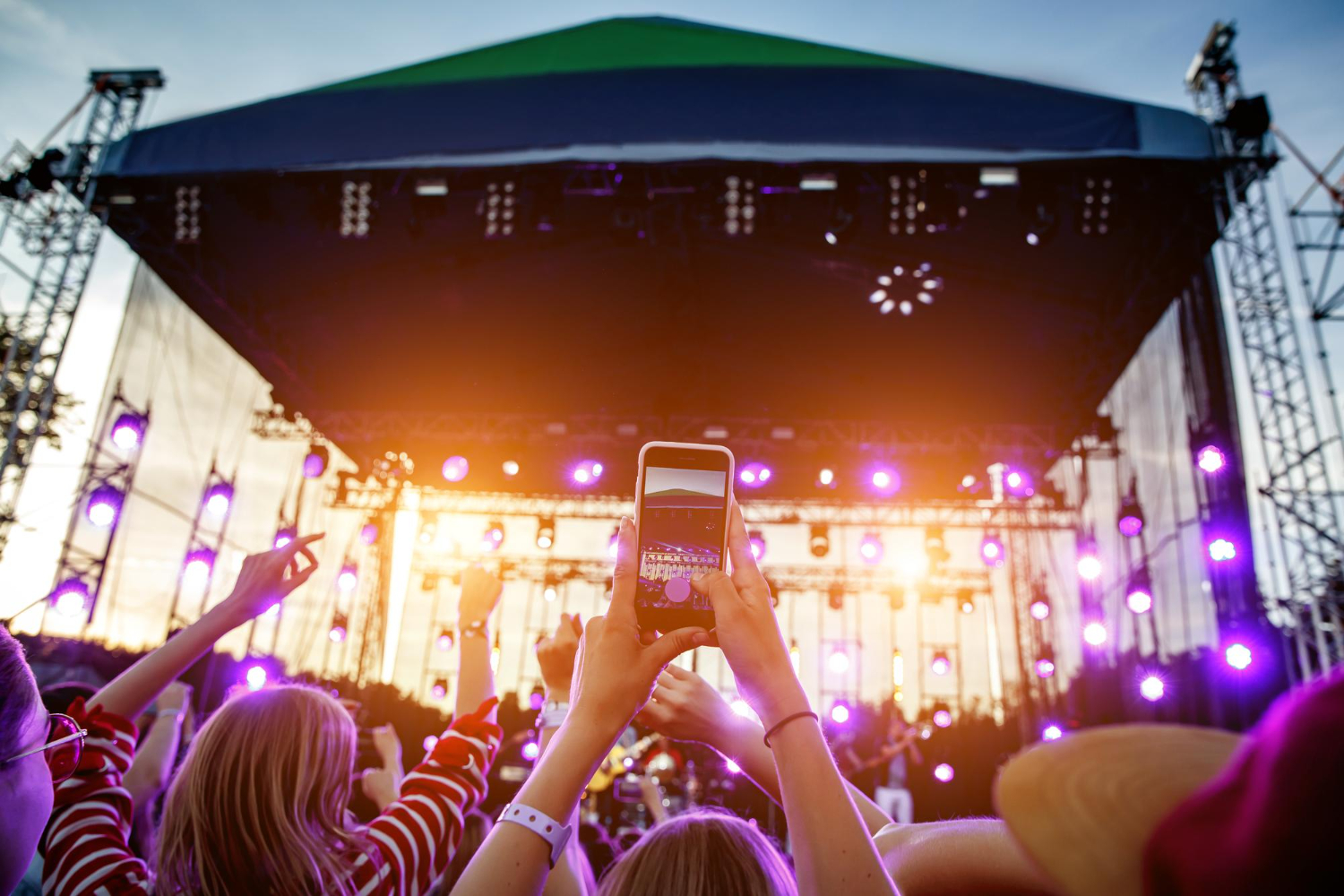
An in-person event brings everyone together in one physical location — a conference, product launch, gala dinner, awards night or exhibition. Everything happens in the room: the presentations, the networking, the catering and the atmosphere.
Strengths
- Highest engagement. Nothing online yet replicates the energy of a live audience, spontaneous conversations and face-to-face connection.
- Networking and relationships. The hallway conversations and after-party often deliver more value than the sessions themselves.
- Sensory experience. Staging, lighting, sound and scale create memorable moments that reinforce a brand.
Trade-offs
- Reach is capped by venue capacity and by who can physically travel.
- Cost per attendee is higher once venue, catering, travel and accommodation are counted.
- Largest environmental footprint due to travel.
AV requirements: staging, LED screens, professional audio, lighting, and a technical crew to run the show. See our full event production overview.
What is a virtual event?
A virtual event happens entirely online — attendees join from anywhere via a streaming platform. Common formats include webinars, online conferences, training sessions, town halls and product announcements.
Strengths
- Unlimited, global reach. Anyone with a link can attend, removing travel and capacity limits.
- Most cost-effective. No venue, catering or travel — the main costs are the platform and production quality.
- Rich data. Registrations, live attendance, watch time, poll results and Q&A give you measurable insight into audience behaviour.
- Lowest carbon footprint.
Trade-offs
- Engagement is harder to hold. Home and office environments are full of distractions; drop-off is real.
- Limited networking. Breakout rooms and chat help, but rarely match a room full of people.
- Production values matter more, not less. A poorly produced virtual event looks amateurish instantly — audiences judge it against broadcast television, not a webcam call.
AV requirements: a proper production setup elevates a virtual event well beyond a laptop and webcam — multiple cameras, a vision switcher, professional lighting and audio, a reliable encoder and platform, and a producer to run the flow. This is the difference between a "Zoom call" and a broadcast. Explore virtual event production.
What is a hybrid event?
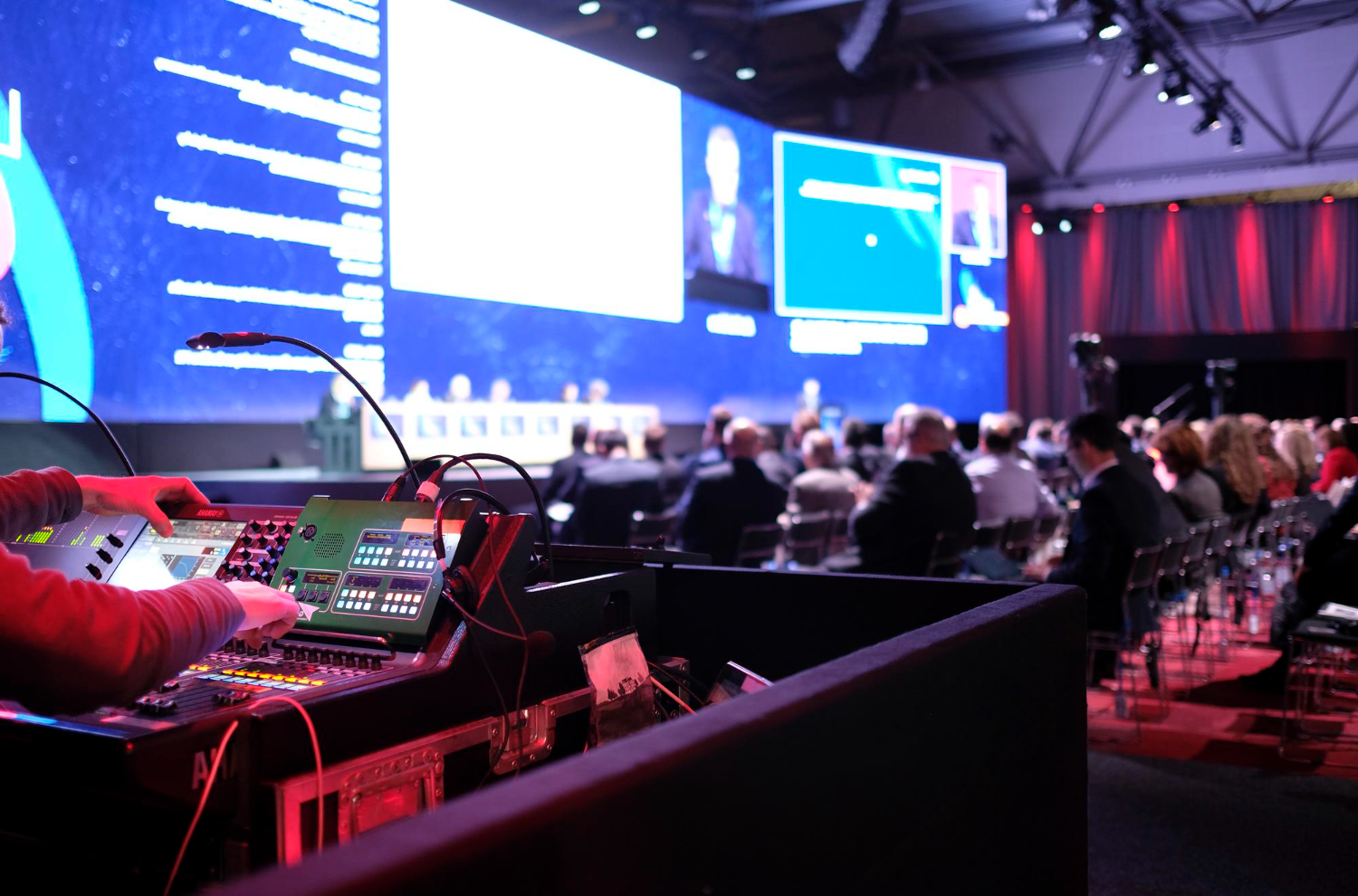
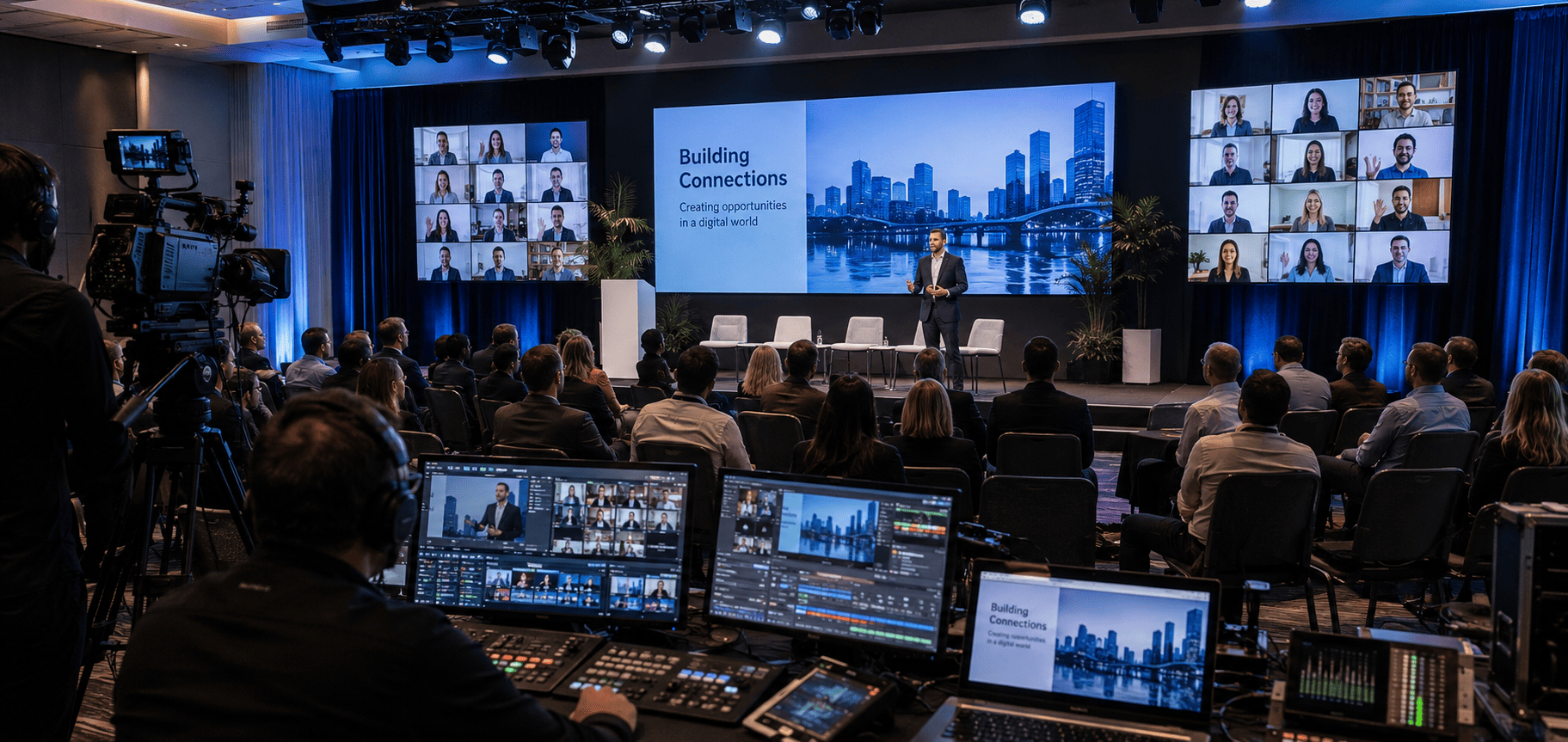
A hybrid event runs a live, in-person event and streams it to an online audience simultaneously — and, done well, lets the two audiences interact. Think a conference with 200 people in the room and 2,000 watching online, all able to ask questions and vote in the same polls.
Strengths
- Maximum reach and flexibility. You keep the atmosphere and networking of a live event while opening it to a global online audience.
- If circumstances change, the online component keeps the event viable.
- Two revenue and engagement streams. In-room and online audiences can be monetised and measured separately.
Trade-offs
- Most complex to produce. You are effectively running two events at once and must design the experience for both audiences deliberately — the online audience should never feel like an afterthought watching a static wide shot.
- Higher cost. It combines in-person production with broadcast-grade streaming.
- Requires the right AV partner. Camera direction, live switching, on-screen graphics, dual-audience Q&A and a stable stream all have to work together.
AV requirements: everything an in-person event needs, plus multi-camera capture, a vision switcher, an encoder and streaming platform, redundant internet, and a producer coordinating both audiences. This is where the phrase hybrid event AV solutions really means something — the integration is the hard part. See hybrid event AV in Melbourne.
Cost comparison: what drives the budget in each format?
Rather than quote fixed prices (they vary widely by scale), here's where the money goes in each format so you can budget realistically:
- In-person: venue hire, catering, staging, AV (screens, audio, lighting), crew, and attendee travel/accommodation.
- Virtual: streaming platform, production setup (cameras, switching, lighting, audio), a producer, and content/graphics. No venue or catering.
- Hybrid: all in-person costs plus the streaming platform, additional cameras and switching, encoding, redundant connectivity, and a producer dedicated to the online audience.
Expert insight: the most common budgeting mistake is treating the online half of a hybrid event as "free" because the room is already set up. In reality, serving the online audience well — dedicated cameras, a vision mix designed for screen, and someone whose only job is that audience — is a distinct production layer. Underfunding it is why so many hybrid events feel flat online.
Engagement: how to keep each audience watching
- In-person: the room does much of the work, but strong staging, lighting and pacing keep energy high.
- Virtual: build in interaction every few minutes — polls, live Q&A, chat prompts — and treat the broadcast like television, with camera changes, graphics and a tight run of show.
- Hybrid: design shared interactivity so both audiences answer the same polls and their questions appear on the same screen. This is the single biggest factor in making an online audience feel included rather than sidelined.
A simple decision framework
Ask yourself these five questions:
- What's the primary goal? Networking and relationships → lean in-person. Reach and information → lean virtual. Both → hybrid.
- Where is your audience? Concentrated locally → in-person. Spread nationally or globally → virtual or hybrid.
- What's the budget per outcome? Tight budget, wide reach → virtual. Premium experience → in-person or hybrid.
- How important is data? If you need detailed attendance and engagement analytics, virtual and hybrid deliver more.
- What's your risk tolerance? Hybrid builds in resilience if travel or attendance is uncertain.
If you answered "both" to goal and audience, hybrid is usually the right call — provided you resource the production properly.
Why the right AV partner matters more than the format
Any of these three formats can succeed or fail on execution. The format sets the ceiling; production quality decides whether you reach it. A capable production partner will:
- Recommend the right format for your goals, not upsell the most complex one.
- Design the experience for every audience in the room and online.
- Provide redundancy — backup connectivity, signal paths and equipment — so a single failure doesn't derail the event.
- Bring the crew and equipment under one roof: screens, audio, lighting, staging, cameras and streaming.
Mars Productions delivers in-person, virtual and hybrid events across Melbourne (with support in Sydney), backed by 10+ years of AV event production experience, 300+ events a year, and over $1 million invested in current equipment.
frequently asked questions
An in-person event happens entirely at a physical venue; a virtual event happens entirely online via a streaming platform; and a hybrid event runs a live in-person event while simultaneously streaming to — and interacting with — an online audience.
Usually yes. A hybrid event includes all the costs of an in-person event plus streaming production — extra cameras, a vision switcher, an encoder and platform, redundant internet, and a producer for the online audience. The trade-off is far greater reach.
Beyond standard in-person AV (screens, audio, lighting, staging), a hybrid event needs multi-camera capture, a vision switcher, a streaming encoder and platform, redundant internet connectivity, and a producer coordinating both audiences.
Treat the broadcast like television: change camera angles, use on-screen graphics, keep a tight run of show, and build in interaction every few minutes through polls, live Q&A and chat prompts.
Yes. Mars Productions delivers hybrid events in Melbourne with streaming to national and global online audiences, plus AV production support in Sydney.
The best approach is platform-agnostic — choosing the streaming and engagement platform that suits your audience, security needs and interactivity requirements, rather than forcing every event onto one tool.
It varies with scale and production values, but virtual is generally the most cost-effective format because there’s no venue, catering or travel. The main costs are the platform, the production setup and a producer. Request a quote for an accurate figure.
Not two separate plans, but one integrated plan that deliberately designs the experience for both the in-room and online audiences — including shared interactivity — rather than treating the online audience as an afterthought.
Enough upload bandwidth for your stream’s bitrate with headroom to spare, plus a redundant connection (a second line or bonded cellular) so a single outage doesn’t take the stream down. A production partner will assess and provision this for your venue.
It depends on your goals. In-person creates the most impact and buzz; virtual maximises reach cheaply; hybrid combines a high-impact live moment with a large online audience — often the strongest choice for launches at scale.
They can be, because home and office environments are distracting. But a well-produced virtual event with strong pacing, broadcast-quality vision and frequent interaction can hold attention effectively — production quality matters more than the format.
Yes. Capturing your in-person event on camera lets you repurpose content into on-demand video, highlights and marketing assets — one reason many organisers add production even to purely in-person events.
Virtual and hybrid provide rich data (registrations, watch time, poll and Q&A engagement, drop-off). In-person ROI relies more on surveys, leads captured and post-event follow-up. Define your success metrics before choosing the format.
Virtual has the lowest carbon footprint because it removes travel; hybrid sits in the middle; and in-person has the highest footprint. Sustainability goals increasingly influence format choice for corporate and government events.
Ready to choose the right format?
Tell us your goals, audience and budget and we'll recommend the format — in-person, virtual or hybrid — that delivers the best outcome, then produce it end to end.