
Event production is the end-to-end technical and creative delivery of a live, virtual or hybrid event — the planning, design, equipment and crew that turn a concept into a polished experience.
It covers everything the audience sees and hears (staging, LED screens, lighting, audio, video and content) and everything they don’t (technical design, scheduling, rigging, power, crewing and on-the-day management). Event production is distinct from event management: event management handles logistics like venue, catering and guest lists, while event production handles the technical and creative execution that makes the event look and sound professional.
This guide explains what event production includes, how the process works step by step, who’s involved, what it costs, and how to choose the right event production company in Melbourne.
Event Production vs Event Management: What's the Difference?
These terms are often confused, so let's separate them clearly.
| Event Management | Event Production | |
|---|---|---|
| Focus | Logistics and coordination | Technical and creative delivery |
| Handles | Venue, catering, guest lists, budgets, schedules, suppliers | Staging, AV, lighting, sound, video, rigging, crew |
| Question it answers | "Is everything organised?" | "Does it look, sound and run like a professional show?" |
| Key people | Event manager, coordinator | Technical producer, AV technicians, operators |
On many events the two overlap and a single company can do both — but understanding the distinction helps you brief the right partner and avoid gaps in responsibility.
What Does Event Production Include?
Event production is best understood as a set of interlocking disciplines. Most events use several of these together.
Staging and Set Design
The physical stage, sets, backdrops, plinths and scenic elements. Good staging directs attention, reinforces branding and gives presenters and performers a professional platform.
Audio
Sound systems, microphones, mixing and on-site audio engineering so every speech, performance and video is heard clearly. Poor audio is the fastest way to lose an audience — it's the one element people notice instantly when it fails. Explore audio services.
Lighting
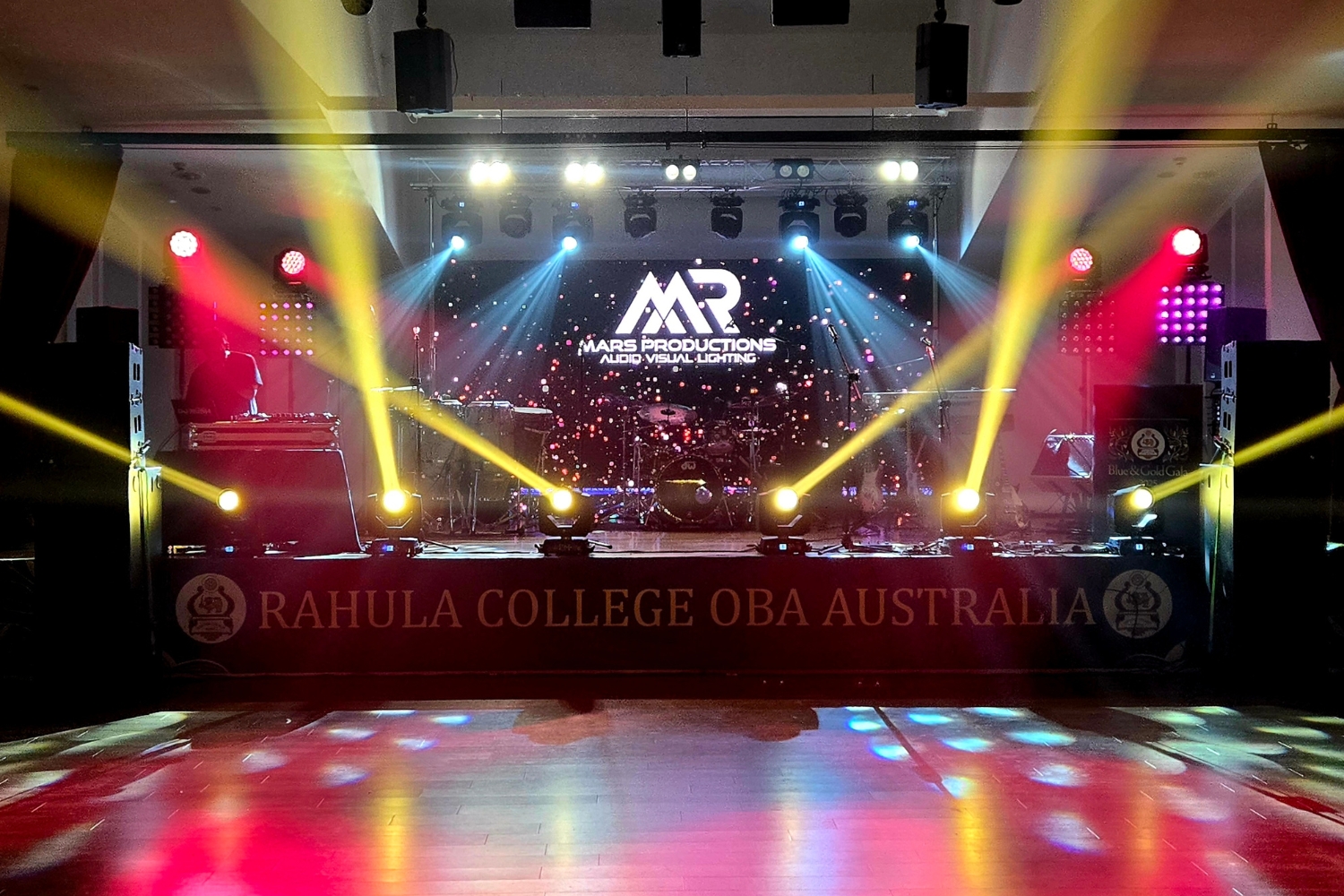
Stage, architectural and atmospheric lighting that sets mood, focuses attention and makes the room feel intentional. Lighting is often the difference between a space that feels flat and one that feels like an event. See lighting design.
Video and LED Screens
LED video walls, projection, cameras and content playback. Screens display presentations, branding, live camera feeds and creative content — and increasingly carry the online audience in hybrid formats.
Vision and Content
The creative and technical layer that prepares and drives what appears on screen — graphics, presentation management, live camera switching and playback.
Rigging and Power
The structural and electrical backbone: truss, motors, ground support and power distribution, all delivered to strict safety standards. This is invisible when done well and catastrophic when done badly.
Technical Crew
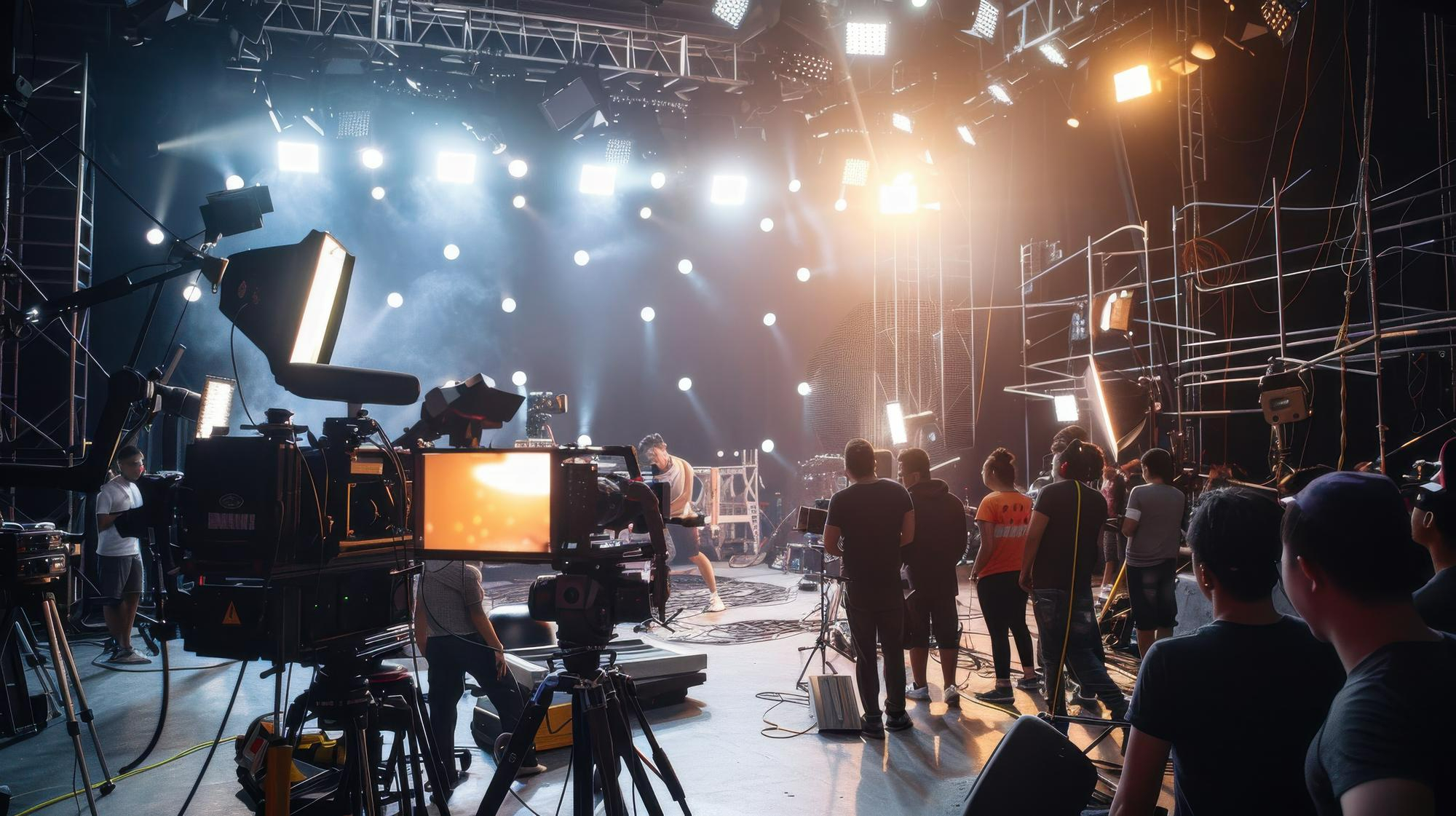
Technical producers, AV technicians, camera operators, audio engineers and lighting operators who design the show, build it, run it and pack it down.
Streaming (for Virtual and Hybrid)
Cameras, switching, encoding and platforms that extend an event to an online audience. See our guide to virtual vs hybrid vs in-person events.
The Event Production Process, Step by Step
Professional event production follows a repeatable process. Here's how a typical project runs from first call to pack-down, with what's actually delivered at each stage.
Discovery and Brief
The producer runs a discovery call to learn your goals, audience size, budget range, venue and any content or messaging constraints. Format is decided here too, and non-negotiables like accessibility or broadcast requirements are flagged early.
Concept and Technical Design
The team translates the brief into a technical plan: staging layout, screen sizes, audio coverage, lighting design, power and rigging loads, and a crew plan sized to the show's complexity.
Quoting and Planning
You receive an itemised proposal covering equipment, labour, freight and contingencies. Once approved, planning begins — floor plans, run sheets, content specs and a master schedule.
Pre-Production
Slides, videos and graphics are collected and formatted. Equipment is pulled from the warehouse, bench-tested and packed. The crew is briefed and any remote tech checks are scheduled.
Bump-In (Setup)
The crew loads in, builds the staging, rigs screens and lighting, sets up audio, then tests every system before doors open. ("Bump-in" and "bump-out" are the industry terms for setup and pack-down.)
Rehearsal and Show Call
Presenters walk the stage and test cues. The technical producer calls the show against the run sheet, coordinating vision, audio, lighting and stage management as one team.
The Live Event
The crew operates the show live — audio, vision, lighting and any stream — reacting in real time so issues are resolved without the audience ever noticing.
Bump-Out and Debrief
Equipment is powered down, packed and removed on a reverse schedule to bump-in. The team then debriefs to capture what worked and what to improve next time.
Who's involved in event production?
A well-run production is a team of specialists:
- Technical producer / production manager — designs the show, owns the technical plan and runs event day.
- AV technicians — set up and operate the audio-visual systems.
- Audio engineer — mixes and manages sound.
- Lighting operator / designer — designs and runs the lighting.
- Camera operators and vision switcher — for recorded, streamed or IMAG (image magnification) events.
- Riggers — install truss, motors and structures safely.
- Content / graphics operator — manages presentations and on-screen content.
On smaller events several of these roles are combined; on large events each is a dedicated specialist.
What types of events need production?
Almost any event benefits from professional production, but it's essential for:
- Corporate events — conferences, AGMs, town halls, sales kick-offs. See corporate event production.
- Product launches and brand activations — where impact and brand consistency matter.
- Awards nights and gala dinners — staging, lighting and sound create the sense of occasion.
- Conferences and exhibitions — multi-session, multi-room technical coordination. See exhibition AV hire.
- Concerts and festivals — large-scale audio, lighting, LED and staging.
- Virtual and hybrid events — broadcast-grade production for online audiences.
How much does event production cost in Melbourne?
There's no single figure because production scales enormously — a small meeting AV package is a few thousand dollars, while a multi-day conference or large activation can run into the tens of thousands. Cost is driven by:
- Scale — audience size, number of rooms and days.
- Equipment — screens, audio, lighting, staging and their specifications.
- Crew — the number of specialists and hours required.
- Complexity — live switching, streaming, multiple sessions and custom scenic elements.
The most reliable way to budget is a detailed brief and an itemised quote. For a deeper breakdown, see how much does event production cost in Melbourne and our LED screen hire price guide.
How to choose an event production company in Melbourne
Use these criteria to separate a reliable partner from a risky one:
- Relevant experience — have they delivered events like yours? Ask for a portfolio or case studies.
- End-to-end capability — can they provide screens, audio, lighting, staging and streaming under one roof, or will you juggle multiple vendors?
- Local knowledge — familiarity with Melbourne venues, their rigging points, power and access reduces risk and planning time.
- Owned, well-maintained equipment — companies that own current inventory are more reliable than those who sub-hire everything.
- A clear process and communication — a good producer asks the right questions early and gives you a detailed plan, not vague promises.
- Redundancy and safety — do they build in backups and comply with rigging and electrical standards?
For a full walkthrough, read how to choose an event production company in Melbourne.
Why Melbourne organisers work with Mars Productions
Mars Productions is a Melbourne-based event production company delivering corporate events, live productions, activations and outdoor events, with additional AV production support in Sydney. The team brings:
- 10+ years of AV event production experience and 50+ years of combined technical expertise.
- 300+ events delivered each year.
- Over $1 million invested in current, professional-grade equipment.
- End-to-end delivery — screens, audio, lighting, staging, video and streaming from one accountable team.
Whether you're planning a conference, product launch, gala or hybrid event, Mars handles the technical and creative execution so you can focus on your guests and your message.
frequently asked questions
Event production is the end-to-end technical and creative delivery of a live, virtual or hybrid event — the planning, design, equipment and crew (staging, screens, lighting, audio, video and content) that turn a concept into a polished, professional experience.
Event management handles logistics such as venue, catering, guest lists and schedules, while event production handles the technical and creative execution — staging, AV, lighting, sound and video. Some companies provide both.
It typically includes staging and set design, audio, lighting, video and LED screens, content and vision, rigging and power, technical crew, and — for virtual or hybrid events — streaming.
A technical producer designs the show, owns the technical plan, coordinates every department, and runs the event on the day to the run sheet, managing issues in real time so the audience never sees them.
Costs scale with the size and complexity of the event — from a few thousand dollars for a small meeting AV package to tens of thousands for a multi-day conference or large activation. An itemised quote based on your brief is the most accurate guide.
Even small events benefit from professional audio and vision — poor sound or a dim, flat room undermines any event. Production can be scaled to suit a modest budget while still looking and sounding professional.
Bump-in is the setup phase when crew load in and build the staging, screens, lighting and audio; bump-out is the pack-down after the event. Both are standard, labour-based line items in a production quote.
The earlier the better — ideally several weeks to a few months for larger events, and earlier again during Melbourne’s busy October–December season when equipment and crew availability tighten.
Yes. A full-service event production company provides all of these under one roof with a single point of contact, which is generally more reliable and cost-effective than coordinating separate hire companies.
Ask about relevant experience, whether they own their equipment, their local venue knowledge, how they build in redundancy and safety, who your day-of contact will be, and for an itemised quote and clear plan.
Yes. Modern event production covers in-person, virtual and hybrid formats, adding cameras, switching, encoding and streaming to serve online audiences alongside those in the room.
Relevant experience, owned and well-maintained equipment, local knowledge, a clear planning process, built-in redundancy, compliance with safety standards, and strong communication throughout.
Start planning your event
Tell us about your event and our Melbourne production team will design the technical and creative approach, then deliver it end to end.